
Why Jacksonville’s Heat and Humidity Are Hard on Appliances
- Mason Hedlund

- Jun 26
- 4 min read
Understanding the Hidden Environmental Forces That Shorten Appliance Lifespans
Most homeowners understand that Jacksonville’s climate can be demanding on roofs, vehicles, HVAC systems, and outdoor equipment. Far fewer realize that the same environmental conditions quietly accelerate wear inside the appliances they depend on every day.
From the persistent humidity that lingers through much of the year to prolonged periods of high temperatures and the corrosive effects of coastal salt air, Northeast Florida presents a uniquely challenging operating environment for modern household appliances. Refrigerators work longer to maintain safe food temperatures. Dryers accumulate moisture more readily. Washing machines become vulnerable to mildew and corrosion. Electronic control boards face increased exposure to condensation and humidity-related failures.
While manufacturers design appliances to perform across a wide range of climates, Jacksonville’s environment places additional demands on nearly every major appliance in the home. Understanding these conditions—and how they influence performance—can help homeowners extend appliance life, reduce unexpected repair costs, and make smarter maintenance decisions.
Jacksonville’s Climate Creates a Perfect Storm for Appliance Wear
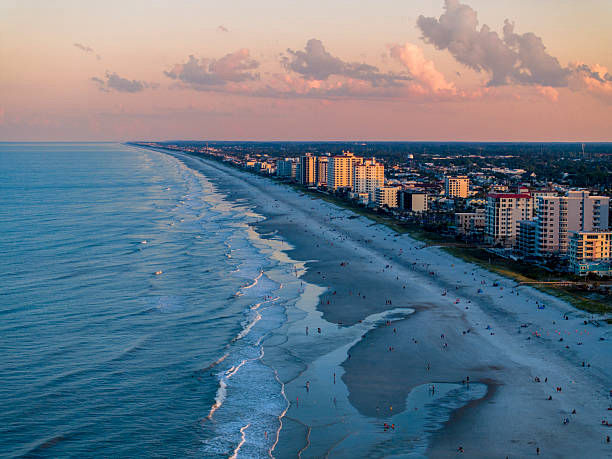
Jacksonville experiences one of the longest warm seasons in the United States. Combined with high humidity and its proximity to the Atlantic Ocean, the region exposes appliances to conditions that differ significantly from those found in drier climates.
Heat alone increases mechanical workload. Humidity introduces moisture into components that were never intended to remain damp for extended periods. Salt carried inland by coastal air accelerates corrosion on exposed metal components, electrical connections, and condenser coils.
Unlike catastrophic failures that occur suddenly, climate-related damage is cumulative. Every day an appliance operates in elevated temperatures or high humidity, its components experience small amounts of additional stress. Over months and years, those stresses compound into premature failures that many homeowners mistake for simple bad luck.
In reality, environmental conditions are often one of the largest contributors to appliance longevity.
Why Refrigerators Work Harder in Jacksonville
A refrigerator’s primary responsibility is removing heat from inside the cabinet.
The hotter the surrounding environment becomes, the more difficult that task becomes.
During Jacksonville summers, kitchen temperatures frequently climb well beyond the thermostat setting homeowners expect. Garages become even more extreme, often reaching temperatures exceeding 100°F.
When ambient temperatures rise:
Compressors operate longer.
Condenser fans run more frequently.
Refrigerant pressures increase.
Electrical consumption rises.
Mechanical wear accelerates.
Every additional compressor cycle represents another opportunity for bearings, start components, capacitors, and relays to wear.
Garage refrigerators are particularly vulnerable. While convenient, garages expose refrigerators to some of the harshest operating environments possible. Extreme heat dramatically reduces efficiency while forcing compressors to work near their design limits for extended periods.
Many homeowners assume a refrigerator that runs constantly is simply “working normally.”
In reality, excessive runtime often signals that environmental conditions are pushing the cooling system far beyond what it experiences in climate-controlled spaces.
Humidity Is an Invisible Threat
Heat receives most of the attention, but humidity is often the more damaging factor.
Modern appliances rely heavily on sophisticated electronics.
Today’s refrigerators, ovens, dishwashers, and washing machines contain multiple circuit boards, sensors, touch panels, communication modules, and digital controls that manage nearly every function.
Moisture and electronics have never been an ideal combination.
High humidity contributes to:
Oxidation of electrical connectors
Corrosion on circuit boards
Moisture intrusion into switches
Sensor inaccuracies
Shortened electronic component lifespan
Even when homeowners never observe visible water inside an appliance, microscopic moisture continuously interacts with electrical components.
Over time, corrosion develops gradually until intermittent failures begin appearing.
One day an ice maker stops functioning.
Weeks later the display begins flashing.
Eventually a control board fails entirely.
Many of these failures begin years before the first symptom appears.
Coastal Air Adds Another Layer of Risk
Living near Jacksonville Beach, Atlantic Beach, Ponte Vedra Beach, or other coastal communities introduces another variable: airborne salt.
Salt particles travel much farther inland than many homeowners realize.
These microscopic particles settle on outdoor HVAC equipment, grills, automobiles—and appliances located inside homes.
Although indoor appliances remain protected from direct weather exposure, salty air still enters homes whenever doors and windows open.
Over time this accelerates corrosion on:
Condenser coils
Copper tubing
Steel fasteners
Wire terminals
Electrical connectors
Cabinet hardware
Corrosion increases electrical resistance, weakens structural components, and reduces cooling efficiency.
For homeowners living within several miles of the Atlantic coastline, routine maintenance becomes even more valuable than in inland communities.
Dryers Face a Different Kind of Challenge
Dryers remove moisture from clothing by combining heat with airflow.
Jacksonville’s naturally humid environment means the surrounding air already contains substantial moisture before a drying cycle even begins.
This creates two challenges.
First, drying efficiency decreases because humid air absorbs moisture less effectively than dry air.
Second, lint mixed with humidity creates conditions that allow debris to cling more aggressively inside vent systems.
Restricted airflow forces heating elements or gas burners to remain active longer.
Longer drying times increase:
Utility costs
Component wear
Thermal stress
Fire risk associated with excessive lint accumulation
Many homeowners initially blame the dryer itself when clothing requires multiple cycles.
Frequently, the underlying issue is reduced airflow caused by lint buildup combined with Florida’s naturally humid climate.
Regular dryer vent maintenance becomes especially important in coastal Florida—not only for efficiency but also for safety.
Jacksonville’s climate is one of the hidden factors that influences how long your appliances last and how reliably they perform. While heat, humidity, and coastal salt air cannot be controlled, their effects can be managed through routine maintenance, timely repairs, and early diagnosis when small issues first appear. Homeowners who understand how their environment impacts their appliances are far more likely to avoid costly breakdowns and extend the life of their investments. If you’ve noticed longer drying times, inconsistent cooling, unusual noises, or higher energy bills, addressing the problem early can often prevent a much more expensive repair—or even a premature replacement. If you’re experiencing appliance issues anywhere in Jacksonville or the surrounding Beaches communities, Hedlund Appliance Service provides honest diagnostics, transparent recommendations, and dependable repairs backed by years of hands-on experience.
Contact us today to schedule your service and keep your appliances operating at their best, no matter what Florida’s climate throws their way.
Comments